
The New Rules of Entertainment: Why We’re Embracing Villains, Vinyl, and Virtual Farms

In a world that never stops scrolling, our entertainment habits are fundamentally shifting. We’re no longer just passive consumers; we’re seeking deeper connections, nostalgic comforts, and complex narratives that mirror our real-world anxieties. From the morally grey villains we root for on screen to the analog records spinning in our living rooms, and the peaceful digital farms we escape to—pop culture is evolving. Here is a look at the three biggest entertainment trends defining the year.
1. The Evolution of Villains: Why Modern Audiences Are Rooting for the Anti-Hero
Gone are the days when movie villains simply twirled their mustaches and monologued about world domination. Over the last few years, there has been a massive shift in how streaming platforms and studios write their antagonists. Today, the most talked-about characters on screen aren’t the flawless heroes—they are the complex, troubled anti-heroes.
From gritty crime dramas to high-fantasy epics, writers are giving villains backstories that mirror real-world trauma and systemic failure. Audiences aren’t just watching these characters; they are empathizing with them. Why? Because a villain who believes they are the hero of their own story is far more terrifying—and fascinating—than one who is just evil for the sake of it.
This shift has also changed how we consume media. Social media platforms are flooded with fan theories and “villain appreciation” posts, turning traditional storytelling on its head. As long as writers continue to blur the line between good and evil, the anti-hero will remain the undisputed king of the screen.
2. The Vinyl Revival: Why Gen Z is Trading Playlists for Turntables

In an era where over 100 million songs are available at the tap of a screen, a surprising trend is dominating the music industry: vinyl records are back, and they are being driven by the generation that grew up on streaming.
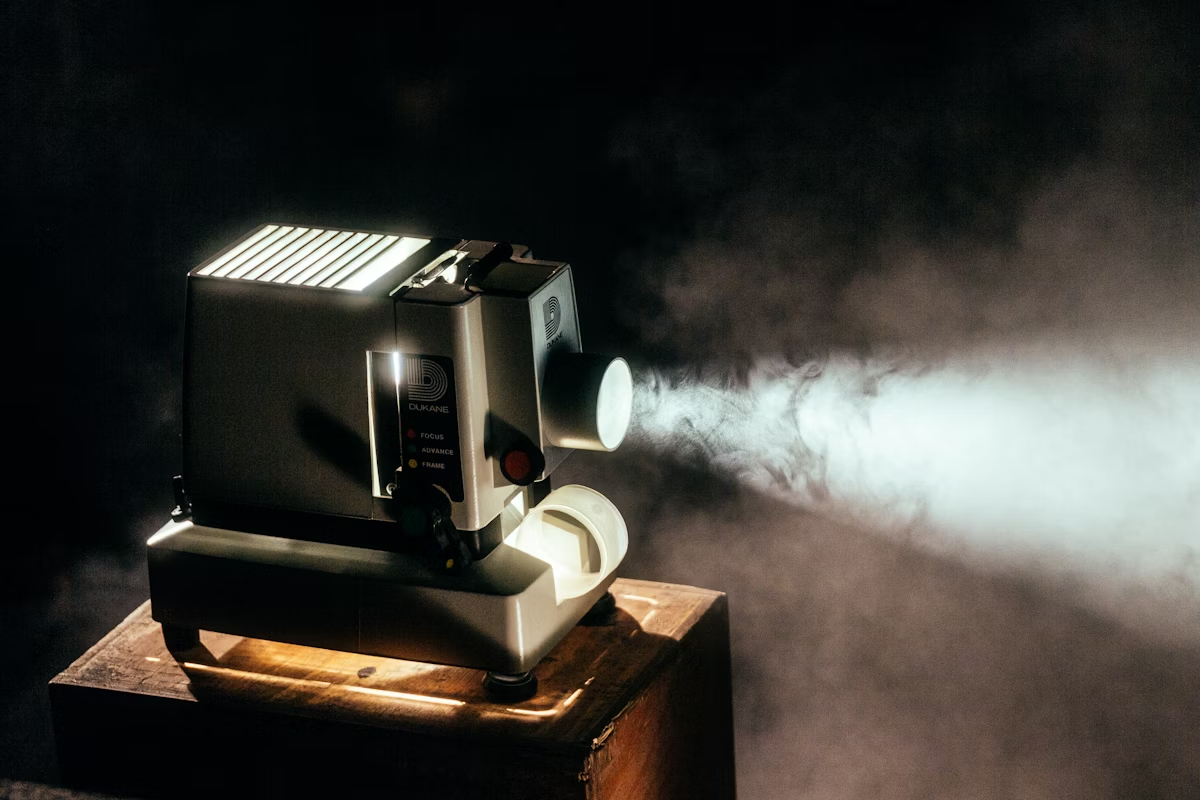
Generation Z is leading the charge in physical media sales, buying turntables and colored vinyl at rates not seen since the 1980s. But this isn’t just about listening to music; it’s about the experience. Streaming offers convenience, but vinyl offers a ritual. The act of sliding a record out of its sleeve, placing the needle down, and hearing the warm, analog crackle before the music starts is an intentional break from the fast-paced digital world.
For many young music fans, vinyl is also a physical connection to the artists they love. It’s tangible merchandise that doubles as room decor. As one record store owner put it, “You can’t frame a Spotify playlist.” With major pop and hip-hop artists now releasing special edition vinyl alongside their digital drops, this analog revival isn’t just a passing trend—it’s a cultural reset.
3. Comfort Gaming: The Rise of Cozy Simulations in a High-Stress World

For decades, the gaming industry was defined by high-octane shooters, punishing difficulty levels, and hyper-competitive online lobbies. But recently, a new genre has quietly taken over the charts: “Cozy Games.”
Farming simulators, life RPGs, and puzzle adventures are dominating platforms like the Nintendo Switch and PC. These games don’t feature game-over screens or toxic chat rooms. Instead, they offer players a peaceful escape—watering virtual crops, decorating a digital cabin, or exploring a calm, open world at their own pace.
Psychologists point to the “cozy gaming” trend as a form of digital self-care. After long days of real-world stress, players are seeking environments where they have control, where their actions yield positive results, and where the stakes are low. The stunning success of recent farming and life-sim releases proves that gamers don’t always want to save the world; sometimes, they just want to build a nice little farm and watch the virtual sunset.
The Bottom Line
Whether it’s finding empathy for a flawed character on screen, slowing down to drop a needle on a physical record, or tending to a digital garden, our entertainment choices reflect a universal desire: to feel grounded in an increasingly chaotic world. The future of entertainment isn’t just about bigger spectacles; it’s about deeper connections.