
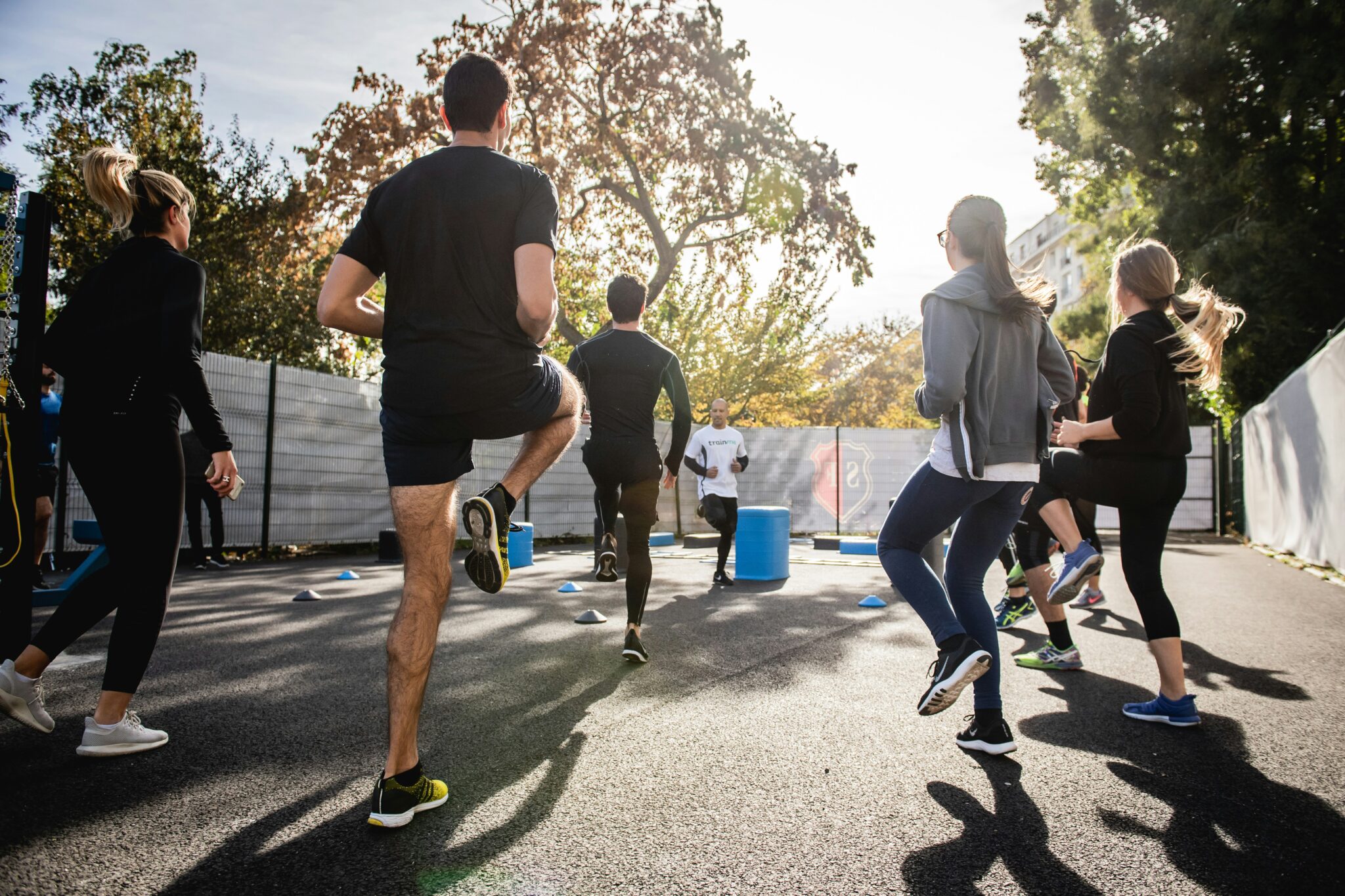
A diverse group of people walking, jogging, cycling, and stretching in a park.
A healthy adult should aim for at least 30 minutes of physical activity every day, totaling 150–300 minutes per week.
If you don’t have 30 continuous minutes, break it into three 10-minute sessions throughout the day. The key to good health is making physical activity a regular part of your lifestyle.
🚶 Aerobic Activity
Suggested Image:
People brisk walking, swimming, cycling, or jogging.
Aim for:
- ✅ 150 minutes of moderate-intensity activity per week
- OR
- ✅ 75 minutes of vigorous-intensity activity per week
- Or combine both throughout the week.
Moderate Activities
- Brisk walking
- Cycling at a comfortable pace
- Swimming
- Gardening or mowing the lawn
Vigorous Activities
- Running
- Aerobic dancing
- Fast cycling
- Hiking uphill
💪 Strength Training
Suggested Image:
A person lifting dumbbells or using resistance bands.
Perform strength training at least 2 days each week.
Focus on:
- All major muscle groups
- Around 10–15 repetitions per exercise
- Use enough resistance to make your muscles work
Examples include:
- Weight lifting
- Resistance band exercises
- Rock climbing
- Bodyweight exercises (push-ups, squats, lunges)
🪑 Reduce Sitting Time
Suggested Image:
Office worker standing and stretching beside a desk.
Even if you exercise regularly, avoid sitting for long periods.
Tips:
- Stand up every 30–60 minutes
- Walk during phone calls
- Use the stairs instead of elevators
- Stretch throughout the day
🪜 Does Taking the Stairs Count as Exercise?
Suggested Image:
A person climbing office or apartment stairs.
Yes!
Climbing stairs is an excellent everyday exercise that:
- Burns approximately 65 calories in 15 minutes
- Improves heart health
- Strengthens leg muscles
- Boosts stamina
Every step contributes to a healthier lifestyle.
🌫️ Is It Safe to Exercise Outdoors During Air Pollution?
Suggested Image:
Split image showing clean air vs. polluted city while jogging.
Outdoor exercise during poor air quality may increase health risks, especially for people with:
- Asthma
- Heart disease
- Lung disease
- Diabetes
During exercise, you:
- Breathe faster
- Take deeper breaths
- Often breathe through your mouth
This allows more pollutants to enter your lungs.
Fortunately, the long-term health benefits of regular exercise generally outweigh the risks, provided you take sensible precautions.
🌿 How to Reduce Exposure to Air Pollution While Exercising
⏰ 1. Choose the Right Time
Suggested Image:
Person jogging early in the morning in a park.
- Exercise early in the morning or after sunset.
- Avoid outdoor workouts during peak pollution hours.
- Reduce exercise intensity when air quality is poor.
🌳 2. Avoid High-Pollution Areas
Suggested Image:
Green park compared with a busy traffic road.
Choose:
- Parks
- Gardens
- Tree-lined walking paths
Avoid:
- Busy roads
- Industrial zones
- Smoking areas
Try to stay at least 500 meters away from heavy traffic whenever possible.
🏋️ 3. Exercise Indoors
Suggested Image:
Modern gym or home workout setup.
On days with poor air quality, consider:
- Gym workouts
- Indoor walking tracks
- Yoga
- Home workouts
- Fitness classes
📱 4. Monitor Air Quality
Suggested Image:
Smartphone displaying an Air Quality Index (AQI) app.
Before exercising outdoors:
- Check the local Air Quality Index (AQI).
- Plan outdoor activities when pollution levels are low.
- Postpone outdoor exercise during air quality alerts.
❤️ Stay Active, Stay Healthy
Suggested Closing Image:
Happy family walking together in a green park.
Regular physical activity improves:
- ❤️ Heart health
- 💪 Muscle strength
- 🧠 Mental well-being
- ⚖️ Weight management
- 😴 Sleep quality
- 😊 Overall quality of life
Even small changes—like taking the stairs, walking more, and reducing sitting time—can make a significant difference.