
Have you ever finished a meal only to feel your stomach become tight, swollen, or uncomfortable? Bloating is a common digestive issue that affects people of all ages. It can make your clothes feel tighter, leave you feeling sluggish, and sometimes even cause puffiness in your face.
The good news is that mild bloating often improves with a few simple home remedies and healthy lifestyle habits.
In this guide, you’ll learn what causes bloating, how to reduce bloating immediately, natural remedies that may help, foods to eat and avoid, and when you should consult a doctor.
What Is Bloating?
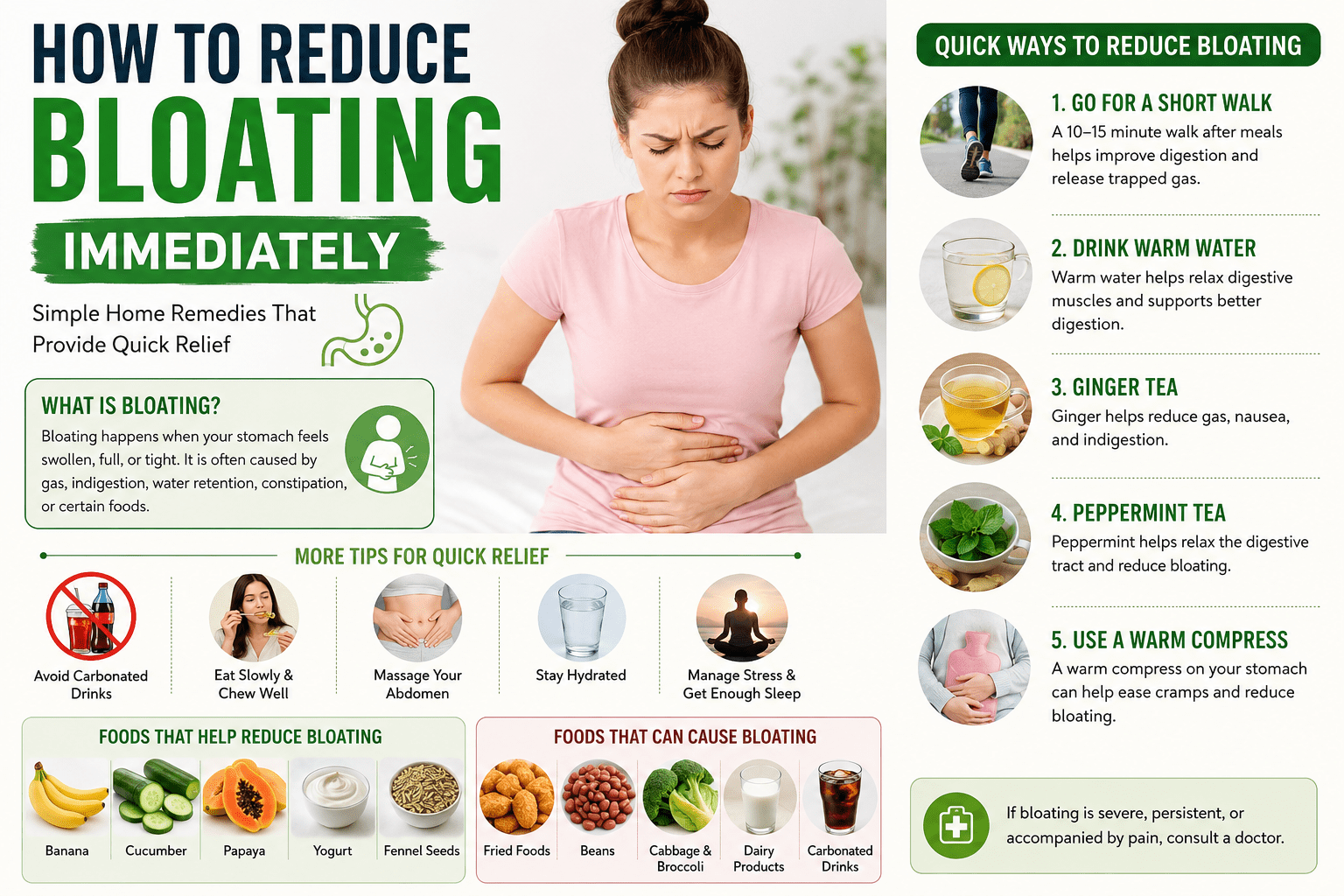
Bloating is the feeling of fullness, tightness, or swelling in the abdomen. It commonly occurs due to excess gas, slow digestion, constipation, water retention, or certain food intolerances.
Common symptoms include:
- Swollen or enlarged stomach
- Feeling full even after eating a small meal
- Excess gas or burping
- Stomach cramps
- Abdominal tightness
- Puffiness after meals
Occasional bloating is normal, but frequent bloating may require medical attention.
How to Reduce Bloating Immediately
If you’re looking for quick relief, these remedies may help reduce bloating within a short time.
1. Take a Short Walk
A gentle 10–15 minute walk after eating helps stimulate digestion and encourages trapped gas to move through the digestive tract.
Benefits include:
- Better digestion
- Less gas buildup
- Reduced stomach pressure
- Feeling lighter after meals
2. Drink Warm Water
Warm water supports digestion and may help relax the muscles of the digestive system.
Good options include:
- Warm plain water
- Warm lemon water
- Jeera (cumin) water
Avoid ice-cold drinks immediately after heavy meals, as they may slow digestion in some people.
3. Drink Ginger Tea
Ginger has long been used to ease digestive discomfort. It may help reduce:
- Gas
- Indigestion
- Nausea
- Stomach discomfort
How to Prepare Ginger Tea
- Boil one inch of fresh ginger in water for 5–7 minutes.
- Strain and drink while warm.
4. Try Peppermint Tea
Peppermint may relax digestive muscles and help trapped gas pass more easily.
You can consume:
- Peppermint tea
- Fresh peppermint leaves in warm water
Note: If you suffer from acid reflux (GERD), peppermint may worsen symptoms.
5. Avoid Carbonated Drinks
Carbonated beverages introduce extra air into your stomach, increasing bloating.
Instead of:
- Soft drinks
- Sparkling water
- Soda
Choose:
- Plain water
- Coconut water
- Herbal tea
6. Apply a Warm Compress
Placing a heating pad or warm towel over your abdomen may help:
- Relax abdominal muscles
- Ease cramps
- Reduce digestive discomfort
This can be especially helpful during menstrual bloating.
7. Eat Slowly
Eating too quickly often causes you to swallow excess air.
Healthy eating habits include:
- Chewing food thoroughly
- Taking smaller bites
- Avoiding overeating
- Eating without rushing
8. Massage Your Abdomen
A gentle clockwise massage may help move trapped gas through your intestines.
Try massaging your stomach for 5–10 minutes while lying comfortably.
Foods That May Help Reduce Bloating
Banana
Rich in potassium, bananas may help reduce water retention caused by excess sodium.
Cucumber
Its high water content may help reduce puffiness and support hydration.
Papaya
Papaya contains digestive enzymes that may improve digestion after meals.
Plain Yogurt
Yogurt with probiotics supports healthy gut bacteria and may improve digestion.
Choose plain, unsweetened yogurt for the best benefits.
Fennel Seeds (Saunf)
A traditional remedy for gas and bloating.
You can:
- Chew fennel seeds after meals
- Prepare fennel tea
Foods That May Cause Bloating
Some foods are more likely to produce gas or cause digestive discomfort.
Common triggers include:
- Fried foods
- Processed foods
- Excess salt
- Beans
- Broccoli
- Cabbage
- Dairy products (for lactose-intolerant individuals)
- Artificial sweeteners
- Sugary foods
Keeping a food diary may help identify your personal triggers.
How to Reduce Face Bloating
Facial puffiness is often caused by dehydration, salty foods, poor sleep, or alcohol.
Drink More Water
Proper hydration helps reduce water retention.
Reduce Salt Intake
Limit:
- Chips
- Instant noodles
- Processed snacks
- Packaged foods
Apply a Cold Compress
Use:
- Ice wrapped in a cloth
- Chilled spoons
- Cold facial roller
Get Enough Sleep
Aim for 7–8 hours of quality sleep every night.
Try Facial Massage
Gentle lymphatic drainage massage may reduce fluid buildup and puffiness.
Can Stress Cause Bloating?
Yes.
Stress can slow digestion and increase gut sensitivity, leading to:
- Gas
- Constipation
- Indigestion
- Stomach tightness
Stress management techniques like meditation, deep breathing, yoga, and regular exercise may improve digestive health.
Exercises That May Help Reduce Bloating
Simple movements can encourage digestion and reduce trapped gas.
Child’s Pose
Helps relax abdominal muscles.
Knee-to-Chest Stretch
May assist in releasing trapped gas.
Cat-Cow Stretch
Gently massages abdominal organs and improves digestion.
Walking
A short walk after meals is one of the easiest ways to reduce bloating naturally.
When Should You See a Doctor?
Occasional bloating is usually harmless. However, seek medical advice if bloating is accompanied by:
- Severe abdominal pain
- Vomiting
- Blood in stool
- Unexplained weight loss
- Difficulty eating
- Persistent constipation
- Ongoing abdominal swelling
Frequent bloating may be associated with conditions such as:
- Irritable Bowel Syndrome (IBS)
- Food intolerances
- Gastritis
- Hormonal imbalance
- Liver disorders
- Ovarian conditions
Tests That May Help Identify the Cause
If bloating occurs regularly, your doctor may recommend diagnostic tests such as:
- Complete Blood Count (CBC)
- Liver Function Test (LFT)
- Thyroid Profile
- Blood Sugar Test
- Stool Examination
- Food Intolerance Tests
Early diagnosis can help identify digestive or metabolic conditions before they become more serious.
How to Prevent Bloating Naturally
Simple lifestyle changes can make a significant difference.
- Drink plenty of water
- Eat slowly
- Avoid overeating
- Limit processed foods
- Exercise regularly
- Reduce excess salt
- Get adequate sleep
- Avoid lying down immediately after eating
Final Thoughts
Bloating is a common digestive problem, but it doesn’t have to interfere with your daily life. Simple habits such as walking after meals, drinking warm water, enjoying ginger tea, and avoiding trigger foods can often provide quick relief.
If bloating becomes frequent, severe, or is accompanied by other concerning symptoms, consult a healthcare professional for proper evaluation and treatment.
Maintaining a healthy diet, staying active, and listening to your body’s signals are the best long-term strategies for better digestive health.