
APIs (Application Programming Interfaces) are an important part of modern web and mobile application development. They allow different software applications, websites, servers, and services to communicate with each other.
For example, when an e-commerce website displays product information from a backend server, the frontend may use an API to request that information. Similarly, payment gateways, maps, social login, weather services, and third-party applications commonly use APIs.
In this guide, we will understand the different types of APIs, how they work, and when each type is commonly used.
What Is an API?
API stands for Application Programming Interface.
An API acts as a communication layer between two applications or systems.
For example:
Frontend → API → Backend → Database
Suppose you have an e-commerce website. When a customer opens a product page, the frontend can send a request to the API:
GET /api/products/123
The server processes the request and returns product information:
{
  "id": 123,
  "name": "Running Shoes",
  "price": 2499,
  "stock": 25
}
The frontend then displays this information to the user.
Main Types of APIs
APIs can be categorized in different ways. The most common classifications are based on access, architecture, and communication style.
1. Public APIs
Public APIs, also called Open APIs, are APIs that are available for external developers or applications to use.
Some public APIs may be completely open, while others may require registration and an API key.
Examples
- Weather APIs
- Currency exchange APIs
- Maps APIs
- Public government APIs
- Payment APIs
For example:
GET https://api.example.com/weather?city=Delhi
The API may return:
{
  "city": "Delhi",
  "temperature": 32,
  "condition": "Sunny"
}
When to use Public APIs
Public APIs are useful when you want to add an external service to your application instead of building the functionality yourself.
2. Private APIs
Private APIs are designed for use within an organization or application ecosystem.
They are generally not intended for public developers.
For example, a large company might have separate systems for:
Website
   ↓
Internal API
   ↓
Order Management System
   ↓
Database
The API allows different internal systems to communicate securely.
Common Uses
Private APIs are commonly used for:
- Internal applications
- Company dashboards
- Employee portals
- ERP systems
- CRM systems
- Internal microservices
3. Partner APIs
Partner APIs are APIs that are shared with selected business partners.
Unlike public APIs, they are not generally available to everyone.
For example, an e-commerce company may integrate with:
- Shipping companies
- Payment providers
- Inventory systems
- Logistics companies
- Marketing platforms
The partner receives authentication credentials and can access specific API functionality.
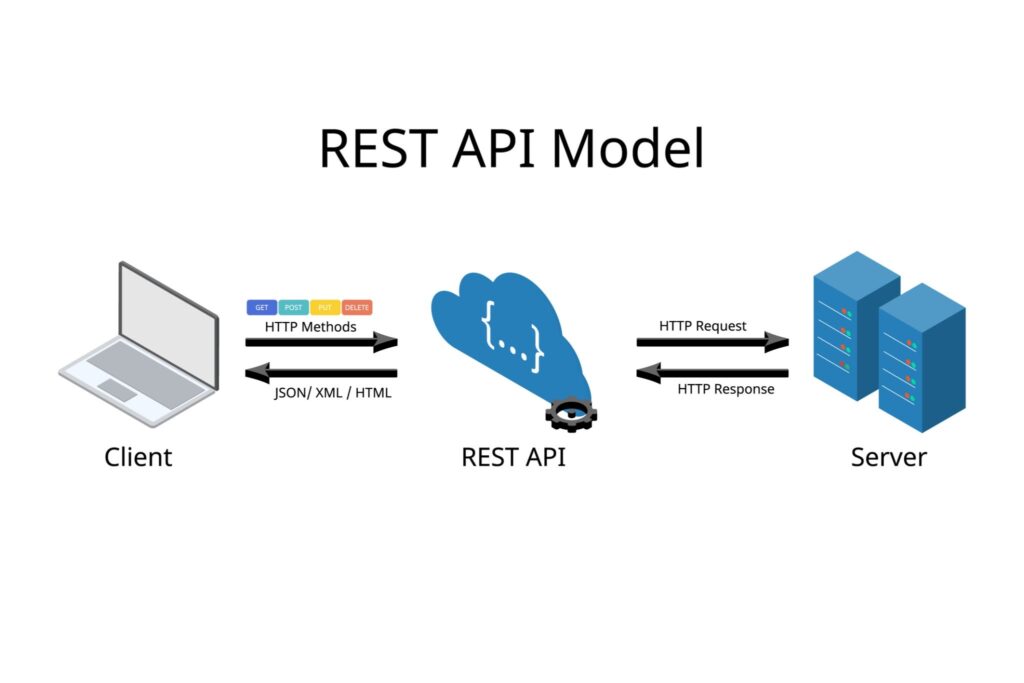
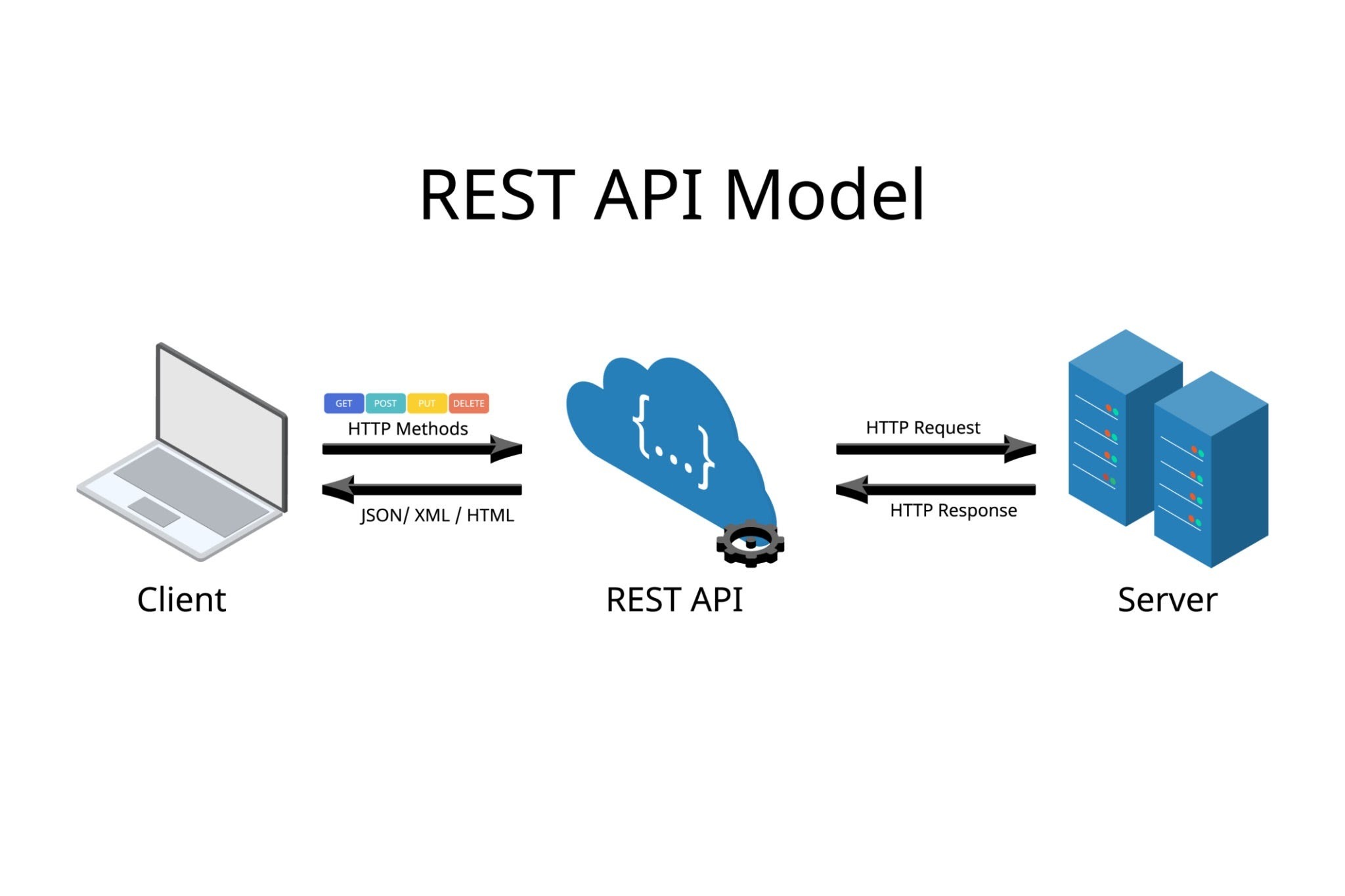
4. REST API
REST stands for Representational State Transfer.
REST is one of the most widely used approaches for building web APIs.
REST APIs commonly use HTTP methods such as:
| Method | Purpose |
|---|---|
| GET | Retrieve data |
| POST | Create data |
| PUT | Update data |
| PATCH | Partially update data |
| DELETE | Delete data |
For example:
GET /api/products
gets products.
POST /api/products
creates a new product.
PUT /api/products/10
updates a product.
DELETE /api/products/10
deletes a product.
REST APIs commonly return data in JSON format.
Example:
{
  "id": 10,
  "name": "T-Shirt",
  "price": 999
}
Advantages of REST APIs
- Easy to understand
- Works well with web applications
- Uses standard HTTP methods
- Supports many programming languages
- Easy to integrate with React, Next.js, WordPress, Shopify and mobile apps
5. SOAP API
SOAP stands for Simple Object Access Protocol.
SOAP is an XML-based API communication protocol that has traditionally been widely used in enterprise applications.
A SOAP request may look like:
<soap:Envelope>
  <soap:Body>
    <GetCustomer>
      <CustomerID>1001</CustomerID>
    </GetCustomer>
  </soap:Body>
</soap:Envelope>
SOAP has strict standards and supports features useful for enterprise systems.
Common Uses
SOAP can be found in:
- Banking systems
- Enterprise applications
- Government systems
- Legacy applications
- Financial services
Compared with REST, SOAP is generally more structured and can be more complex to work with.
6. GraphQL API
GraphQL is an API query language that allows the client to request exactly the data it needs.
For example:
query {
  product {
    name
    price
    image
  }
}
The server can return only those requested fields.
This can be useful when an application has complex data requirements.
GraphQL Example
Instead of making several API requests:
/products/10
/products/10/reviews
/products/10/categories
GraphQL can allow the client to request related information through a query.
Advantages
- Flexible data queries
- Can reduce unnecessary data
- Useful for complex applications
- Strongly typed schema
- Good for frontend-heavy applications
7. WebSocket API
WebSocket APIs are designed for real-time, two-way communication between a client and server.
Unlike traditional HTTP requests where the client usually requests information from the server, WebSockets maintain an ongoing connection.
For example:
Client ↔ WebSocket Server
The server can send updates to the client immediately.
Common Uses
- Live chat
- Online gaming
- Stock market applications
- Live notifications
- Real-time dashboards
- Delivery tracking
For example, a chat application can receive a new message instantly without repeatedly refreshing the page.
8. Webhook
A webhook works differently from a normal API request.
With a traditional API:
Client → Request → Server
Server → Response → Client
With a webhook:
Event happens
      ↓
Server → Sends notification → Your application
For example, when a customer completes a payment, a payment provider can send a webhook to your server:
POST /api/payment-webhook
The webhook may contain:
{
  "order_id": "ORD123",
  "status": "paid",
  "amount": 2499
}
Webhooks are commonly used for:
- Payment notifications
- Shopify events
- Order updates
- GitHub events
- Email events
- Shipping updates
9. gRPC API
gRPC is a high-performance remote procedure call framework originally developed by Google.
It commonly uses Protocol Buffers (Protobuf) for data serialization.
gRPC is particularly useful for communication between backend services.
For example:
Service A
   ↓
 gRPC
   ↓
Service B
It is commonly used in:
- Microservices
- Distributed systems
- Internal backend services
- High-performance applications
Compared with typical REST APIs, gRPC can provide efficient communication between services.
10. RPC APIs
RPC stands for Remote Procedure Call.
The idea is that an application can call a function or procedure on another system.
For example:
getUser(1001)
The remote server executes the operation and returns the result.
RPC-based systems include technologies such as:
- JSON-RPC
- XML-RPC
- gRPC
RPC is useful when the application is designed around operations or service methods.
API Authentication Types
API types can also be classified based on how applications authenticate requests.
Common authentication methods include:
API Key
A client sends a unique API key with the request.
GET /api/products?api_key=YOUR_KEY
Bearer Token
A token is sent in the HTTP Authorization header.
Authorization: Bearer YOUR_TOKEN
Basic Authentication
A username and password are encoded and sent with the request.
OAuth 2.0
OAuth 2.0 allows applications to authorize access to resources without sharing the user’s password with the third-party application.
It is commonly used for services such as social login and third-party integrations.
REST vs GraphQL vs SOAP vs gRPC
| Feature | REST | GraphQL | SOAP | gRPC |
|---|---|---|---|---|
| Data format | Usually JSON | Usually JSON | XML | Protobuf |
| Complexity | Low–Medium | Medium | High | Medium |
| Flexibility | Good | Very High | Structured | High |
| Real-time | Requires additional technology | Subscriptions possible | Not its main strength | Streaming supported |
| Common use | Web & mobile apps | Complex frontends | Enterprise systems | Microservices |
| Browser friendly | Yes | Yes | Less convenient | Usually via gRPC-Web |
Which API Should You Use?
There is no single API type that is best for every project.
For a normal website or mobile application
REST API is often a straightforward choice.
For complex frontend applications
GraphQL can be useful when clients need flexible access to different parts of a large data model.
For enterprise or legacy integrations
SOAP may be required when the external system already uses SOAP.
For microservices
gRPC can be useful for fast communication between backend services.
For real-time applications
WebSockets are suitable for continuous two-way communication.
For event notifications
Webhooks are useful when another service needs to notify your application about an event.
API Example in a Modern Web Application
A modern application might use several API technologies together.
For example:
                React / Next.js
                      |
                      ↓
                   REST API
                      |
        ┌─────────────┼─────────────┐
        ↓             ↓             ↓
    Database      Payment API    Shipping API
                      |
                      ↓
                  Webhook
                      |
                      ↓
                Order Updated
For example, an e-commerce application may use a REST API for products, a payment API for payments, and webhooks to receive payment or order updates.
API vs Webhook: What Is the Difference?
A common question is whether APIs and webhooks are the same.
They are not.
With an API, your application usually asks another system for information.
Your App → "Give me the order status"
With a webhook, another system automatically informs your application when something happens.
Payment System → "Payment completed"
So:
API = Request information or perform an operation
Webhook = Receive an event notification
Why APIs Are Important
APIs make it possible to connect different technologies and services.
For example, a modern website can connect:
Frontend
   ↓
API
   ↓
Backend
   ↓
Database

API
 ↓
Payment Gateway

API
 ↓
CRM

API
 ↓
Shipping Provider

API
 ↓
AI Service
Without APIs, developers would have to build many integrations from scratch.
Conclusion
APIs are the communication layer behind many modern websites, mobile applications, SaaS products, and business systems.
The most common API types include REST, SOAP, GraphQL, WebSocket, gRPC, RPC, Webhooks, Public APIs, Private APIs, and Partner APIs.
Understanding these API types is especially important for developers working with React, Next.js, WordPress, Shopify, mobile apps, Node.js, Python, FastAPI, and other modern technologies.
Start with REST APIs if you are new to APIs. Once you understand HTTP methods, requests, responses, JSON, authentication, and status codes, learning GraphQL, WebSockets, webhooks, and gRPC becomes much easier.